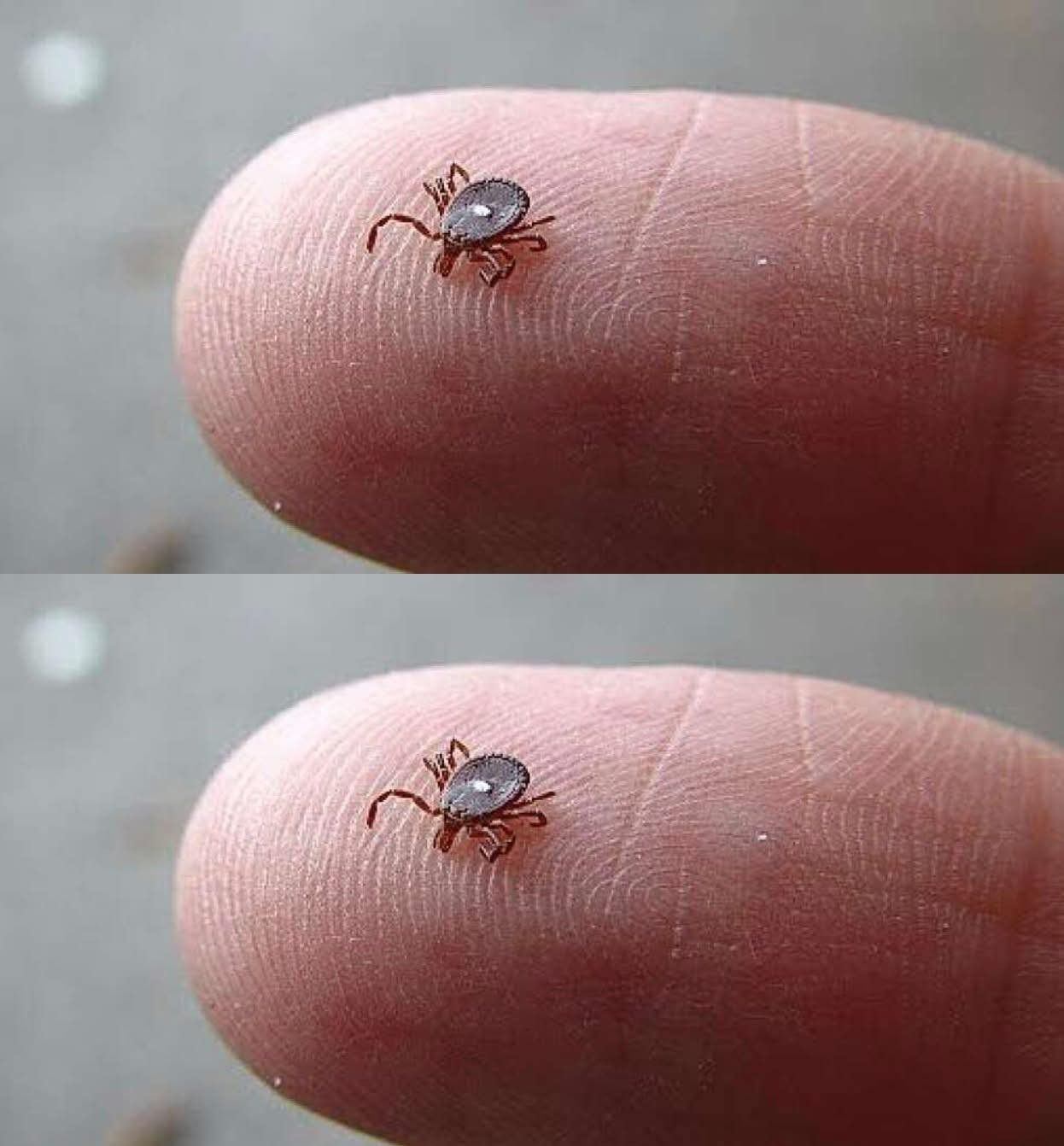
What You’ll Need:
- Fine-tipped tweezers (not blunt!)
- Clean cloth or alcohol wipe
- Small container or sealed bag (optional, for tick ID)
Removal Steps:
- Grasp the tick as close to the skin’s surface as possible—right where its mouthparts enter.
- Pull upward with steady, even pressure. Don’t twist or jerk.
- Clean the bite area with soap and water or rubbing alcohol.
- Wash your hands thoroughly.
💡 If mouthparts remain: Don’t dig! The skin will expel them naturally. Just keep the area clean.
📸 Save the tick? Place it in a sealed bag with a damp cotton ball. Label with date/location. Useful if symptoms develop later.
🩹 Step 2: Monitor for Symptoms (Know What to Watch For)
Most people never get sick—but be alert for signs in the next 1–21 days:
Common Lone Star Tick Illnesses & Symptoms:
1. Ehrlichiosis (bacterial infection)
- Fever, chills, headache
- Muscle aches, fatigue
- Nausea, confusion
- Rare: Rash (more common in children)
2. STARI (Southern Tick-Associated Rash Illness)
- Expanding “bull’s-eye” rash (like Lyme, but Lyme is NOT caused by lone star ticks!)
- Fatigue, fever, muscle pain
3. Alpha-Gal Syndrome (delayed red meat allergy)
- 3–6 hours after eating red meat: Hives, swelling, GI distress, or anaphylaxis
- Triggered by a sugar molecule (alpha-gal) the tick injects
- Lifelong allergy in some cases
⚠️ Seek medical care immediately if you develop:
- High fever (>101°F)
- Severe headache or neck stiffness
- Difficulty breathing or swallowing
- Confusion or persistent vomiting
🛡️ Step 3: Reduce Future Risk (Prevention Is Key)
Lone star ticks are active year-round in warm climates, peaking spring through early fall.
Smart Prevention Tips:
- Use EPA-registered repellents: DEET (20–30%), picaridin, or permethrin (on clothing only)
- Wear light-colored clothing: Makes ticks easier to spot
- Tuck pants into socks when hiking or gardening
- Do full-body tick checks within 2 hours of coming indoors—focus on armpits, groin, scalp, and behind knees
- Shower soon after outdoor activity: Washes off unattached ticks
- Tumble dry clothes on high heat for 10 minutes: Kills hidden ticks
🐾 Don’t forget pets! They can carry ticks indoors. Use vet-approved preventatives.
❓ FAQs: Your Top Questions Answered
Q: Do I need antibiotics after every lone star tick bite?
A: No. Antibiotics are only recommended if you develop symptoms. Prophylactic treatment isn’t standard for lone star ticks (unlike deer ticks in Lyme zones).
A: No. Antibiotics are only recommended if you develop symptoms. Prophylactic treatment isn’t standard for lone star ticks (unlike deer ticks in Lyme zones).
Q: Can lone star ticks transmit Lyme disease?
A: No. Despite myths, lone star ticks do not carry or transmit Lyme disease. That’s caused by black-legged (deer) ticks.
A: No. Despite myths, lone star ticks do not carry or transmit Lyme disease. That’s caused by black-legged (deer) ticks.
Q: How long must a tick be attached to transmit disease?
A: Ehrlichiosis can transmit in as little as 24 hours—faster than Lyme. That’s why prompt removal matters!
A: Ehrlichiosis can transmit in as little as 24 hours—faster than Lyme. That’s why prompt removal matters!
Q: Should I get the tick tested?
A: Testing isn’t always useful—positive results don’t guarantee you’ll get sick, and negative doesn’t rule out other pathogens. Focus on symptoms, not the tick.
A: Testing isn’t always useful—positive results don’t guarantee you’ll get sick, and negative doesn’t rule out other pathogens. Focus on symptoms, not the tick.
Final Thoughts: Stay Alert, Not Afraid
Ticks are part of life in many regions—but knowledge turns fear into power. By removing ticks properly, watching for warning signs, and taking smart precautions, you protect yourself without avoiding the outdoors.
Nature is meant to be enjoyed. With these steps, you can hike, garden, and explore—with confidence.
🌲 Found a tick? Stay calm, act fast, and trust your instincts. If something feels “off” in the days ahead, call your doctor. Better safe is always better.
