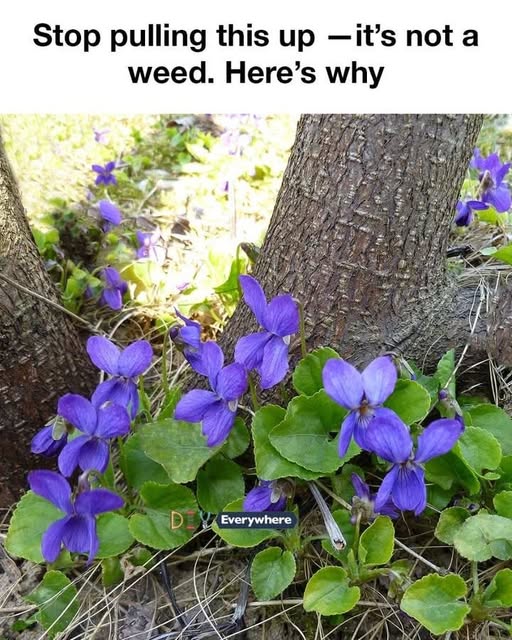
In the world of gardening, not all plants are given the appreciation they deserve. Many homeowners and gardeners often find themselves in a constant battle against what they perceive as ‘weeds,’ pulling them out without a second thought. However, some of these so-called weeds are actually beneficial plants that contribute positively to our gardens and ecosystems. One such plant is the wild violet, a resilient and beautiful species that often gets a bad rap.
Wild violets, with their heart-shaped leaves and delicate purple flowers, are often dismissed as invasive weeds. Yet, these plants offer a plethora of benefits that are often overlooked. From their ecological contributions to their culinary and medicinal uses, wild violets are more than just a nuisance in your garden. This article aims to shed light on why you should stop pulling them up and start appreciating their presence.
1. Understanding Wild Violets: A Misunderstood Plant
Wild violets (Viola sororia) are perennial plants native to North America. They are often found in lawns, gardens, and woodlands, thriving in both sun and shade. These plants are characterized by their low-growing habit, reaching heights of about 4 to 6 inches. The leaves are heart-shaped, and the flowers, which bloom in early spring, are typically violet in color, although they can also be white or blue.
Despite their beauty, wild violets are often misunderstood and labeled as weeds due to their ability to spread quickly. They propagate through both seeds and rhizomes, allowing them to form dense mats that can outcompete other plants. However, this very characteristic makes them excellent ground cover, providing numerous ecological benefits.
2. The Ecological Benefits of Wild Violets
Wild violets play a crucial role in supporting local ecosystems. They are one of the first plants to bloom in the spring, providing an early source of nectar for pollinators such as bees and butterflies. This is particularly important as many pollinators emerge from hibernation and need sustenance.
Moreover, wild violets serve as host plants for several species of fritillary butterflies. The caterpillars of these butterflies feed on the leaves of violets, making them an essential part of their life cycle. By allowing wild violets to grow, you are supporting biodiversity and contributing to the health of local ecosystems.
3. Wild Violets as a Natural Ground Cover
One of the most practical uses of wild violets is as a natural ground cover. Their dense growth habit helps to suppress weeds, reducing the need for chemical herbicides. This is particularly beneficial in areas where you want to maintain a more natural landscape.
Wild violets are also drought-tolerant once established, requiring minimal maintenance. They can thrive in a variety of soil conditions, making them an excellent choice for areas where grass struggles to grow. By using wild violets as ground cover, you can create a lush, green carpet that is both beautiful and environmentally friendly.