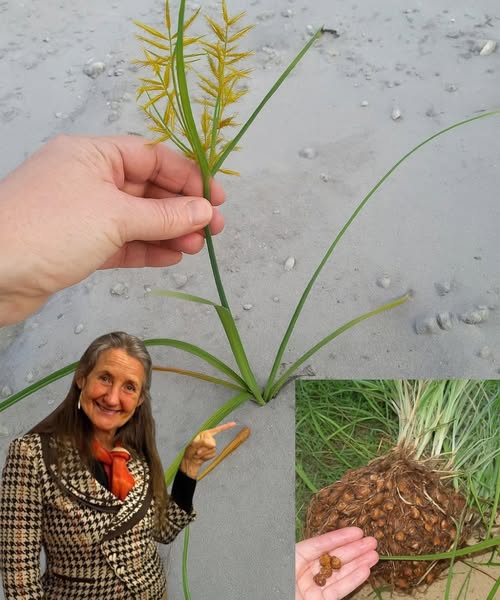
Imagine a plant that’s been dismissed as a pesky weed, yet holds secrets to supercharging your health, tantalizing your taste buds, and even transforming your garden. Meet Yellow Nutsedge (Cyperus esculentus), also known as tiger nut, chufa, or earth almond. This unassuming grass-like plant, with its sweet, nutty tubers hidden beneath the soil, is a nutritional powerhouse, a culinary gem, and a versatile resource that’s been cherished for centuries in cultures across the globe. If you’ve ever cursed its stubborn roots in your garden, prepare to be amazed—this “weed” might just become your new obsession.
🌱 What Is Yellow Nutsedge?
Yellow nutsedge is a perennial plant native to Africa, now thriving in warm and temperate regions worldwide. It pops up in gardens, fields, and near water, often in sandy soils. Its grass-like leaves, triangular stems, and clusters of yellow-brown seed heads make it easy to spot, but it’s the small, marble-sized tubers underground that steal the show. These nutrient-packed gems are sweet, slightly chewy, and bursting with potential.
Far from being just a garden nuisance, yellow nutsedge has been a staple in diets, traditional medicine, and even cosmetics in places like Spain, Africa, and the Middle East. Ready to unlock its secrets? Let’s dive into the incredible benefits and uses that make this plant a hidden treasure.
🥗 Nutritional Goldmine: What’s Inside Tiger Nuts?
The tubers of yellow nutsedge are a nutritional jackpot, offering a blend of energy-boosting and health-supporting nutrients. Here’s what makes them so special:
Healthy Fats: Packed with monounsaturated fats, similar to those in olive oil, for heart health.
Dietary Fiber: Supports digestion and keeps your gut happy.
Plant-Based Protein: A great option for vegetarians and vegans.
Vitamins E and C: Powerful antioxidants for skin health and immunity.
Minerals: Magnesium, phosphorus, potassium, and iron for strong bones and muscles.
